

In the cutthroat world of Ethereum rollups, picking the right DA layer for Ethereum rollups can make or break your project's scalability. As we hit 2026, EigenDA vs Celestia isn't just a debate; it's a showdown shaping modular blockchain stacks. EigenDA blasts through data at blistering speeds thanks to restaking magic, while Celestia counters with lightning-fast finality and rock-solid decentralization. Rollup builders, listen up: your choice here dictates costs, security, and user experience. Let's dive into why these two dominate and how they stack up for your next big build.
EigenDA isn't messing around. Built on EigenLayer's restaking framework, it taps Ethereum's vast validator pool to secure massive data blobs. Picture this: up to 100 MB per second throughput, perfect for high-volume apps like DeFi aggregators or gaming rollups pumping out transactions non-stop. Live on mainnet and Sepolia, it's battle-tested for rollups and even Hoodi setups. But here's the trade-off: it leans on a Data Availability Committee (DAC) for verification, adding a layer of trust you might not love if you're all-in on pure decentralization.
EigenDA's Restaking Edge: Speed Meets Ethereum Security
Restaking is EigenDA's secret sauce. Validators stake ETH once, then extend it to secure DA services, slashing costs while inheriting Ethereum's battle-hardened security. Finality? Around 12-15 minutes, synced to Ethereum's block times - solid for most, but if your app craves sub-minute confirms, it might feel sluggish. Throughput crushes it now, outpacing rivals, though Celestia's upgrades loom large. For Ethereum loyalists, this EigenDA Ethereum integration feels seamless, like plugging into the mother ship's power grid.
EigenDA vs Celestia: Key Specs Comparison
| Specification | EigenDA | Celestia |
|---|---|---|
| Throughput | 100 MB/s | 8 MB/6s (scaling to 1 GB) |
| Finality | 12-15 min | 15 s |
| Security Model | DAC | DAS |
Celestia's DAS Revolution: Light, Fast, and Trust-Minimized
Celestia flips the script as a sovereign DA layer, wielding Data Availability Sampling (DAS) so light clients verify huge blocks without downloading everything. Current mainnet: 8 MB every 6 seconds, with roadmaps screaming toward 1 GB 'fiber-optic' blockspace. Finality in 15 seconds? That's rollup heaven for real-time apps. Costs per MB undercut Ethereum blobs hard, making it a budget beast. No DAC trust needed - pure decentralized verification keeps things permissionless and robust.
Why does this matter for your rollup? Celestia's standalone design shines in modular stacks, interoperating effortlessly without Ethereum's baggage. Benchmarks show it leading in raw speed tests, and with throughput upgrades inbound, it's closing the gap on EigenDA fast. If decentralization is your north star, Celestia's your pick - no committees, just sampling-powered scale.
Throughput Throwdown: Who Blazes Faster in 2026?
Raw numbers: EigenDA's 100 MB/s smokes Celestia's current 8 MB/6s setup, ideal for data-heavy rollups. But Celestia's scaling narrative is fierce - projections say it'll match or beat EigenDA by year-end, all while keeping public verifiability intact. EigenDA's Ethereum tether means performance swings with L1 congestion; Celestia? Independent and predictable. For high-stakes trading bots or NFT marketplaces, EigenDA's burst capacity wins today. Gaming or socialfi? Celestia's quick finality edges it.
Cost creeps in too. Both beat Ethereum's native DA, but Celestia's structure promises steadier pricing. Check our deeper dive on comparing EigenDA and Celestia for project-specific fits. Trade smart: match your rollup's data diet to these beasts.
Security seals the deal or sinks the ship in DA choices. EigenDA's restaking hooks into Ethereum's validator army, but that DAC layer means trusting a committee to flag bad data - a pragmatic shortcut for speed demons okay with some oversight. Celestia? DAS lets anyone sample and verify, no middlemen, pure trust-minimized bliss. If your rollup handles sensitive trades or governance votes, Celestia's decentralization dodges single points of failure like a pro. EigenDA suits Ethereum purists betting on restaked ETH's proven punch.
Cost Breakdown: Where Your Rollup Dollars Go Furthest
Pinching pennies matters when scaling. EigenDA keeps costs low via shared restaking infrastructure, but Ethereum congestion can spike fees unpredictably. Celestia delivers Celestia data availability at a fraction of blob prices, with predictable economics thanks to its sovereign chain. Projections peg Celestia undercutting rivals long-term, especially post-upgrades. For budget-conscious builders launching consumer apps, Celestia's edge sharpens; enterprise rollups might stomach EigenDA's variability for that throughput kick. Dive into our Celestia vs EigenDA pricing guide for the nitty-gritty.
Celestia Technical Analysis Chart
Analysis by Miles Rutledge | Symbol: BINANCE:TIAUSDT | Interval: 1h | Drawings: 7
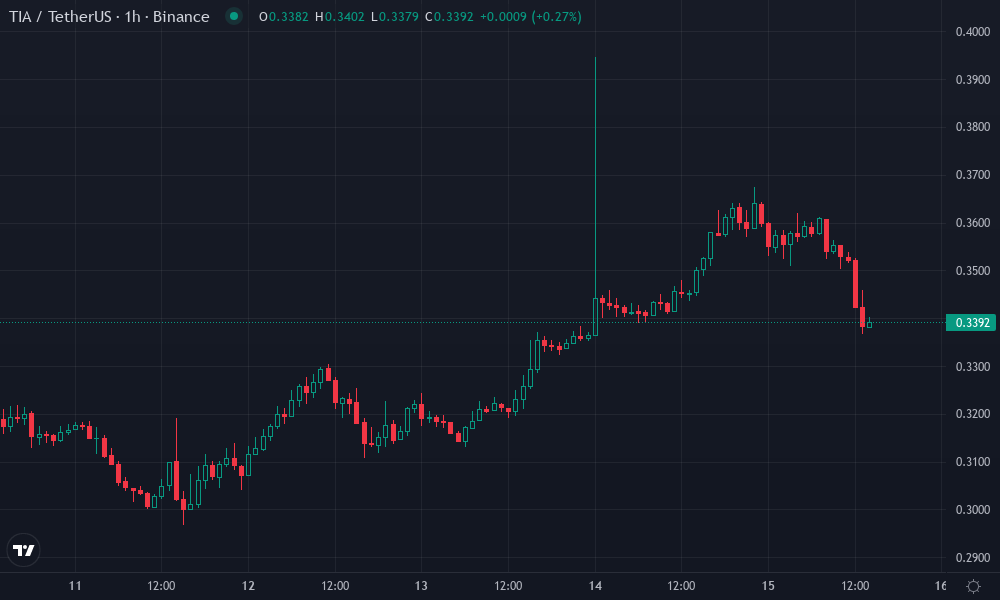
Technical Analysis Summary
Aggressively mark the bearish trendline connecting the swing highs from 12:30 at 6.15 down to 15:00 at 6.02, screaming rejection at resistance. Slap horizontal lines at key support 5.88 (strong bounce zone) and resistance 6.05 (failed breakout). Fib retracement from recent low 5.88 to high 6.15 for pullback targets at 50% 6.015 and 61.8% 6.05. Rectangle the consolidation between 13:45-14:30 from 5.95-6.05. Arrow down on the volume spike breakdown at 14:45. Long entry callout at 5.92 with stop below 5.88 and PT at 6.15. Move fast, trade smart!
Risk Assessment: high
Analysis: Intraday volatility high with DA news noise, but clear support bounce favors upside; my high tolerance loves these setups
Miles Rutledge's Recommendation: Go long aggressively at 5.92, target 6.20, stop 5.85. Celestia crushes EigenDA short-term - move fast!
Key Support & Resistance Levels
📈 Support Levels:
- $5.88 - Strong intraday low with volume support and multiple tests strong
- $5.92 - Minor support from recent wicks moderate
📉 Resistance Levels:
- $6.05 - Key overhead resistance from prior high and fib level strong
- $6.15 - Session high, major rejection zone moderate
Trading Zones (high risk tolerance)
🎯 Entry Zones:
- $5.92 - Aggressive bounce from strong support amid bullish MACD divergence, high reward scalp high risk
🚪 Exit Zones:
- $6.2 - Measured move target from range expansion 💰 profit target
- $5.85 - Tight stop below intraday low to limit downside 🛡️ stop loss
Technical Indicators Analysis
📊 Volume Analysis:
Pattern: Bearish divergence - spikes on downs, fades on ups
Confirms downtrend weakness but recent low volume bounce suggests exhaustion
📈 MACD Analysis:
Signal: Bullish divergence forming, histogram curling up
MACD line crossing signal from below post-drop, reversal signal
Applied TradingView Drawing Utilities
This chart analysis utilizes the following professional drawing tools:
Disclaimer: This technical analysis by Miles Rutledge is for educational purposes only and should not be considered as financial advice. Trading involves risk, and you should always do your own research before making investment decisions. Past performance does not guarantee future results. The analysis reflects the author's personal methodology and risk tolerance (high).
Real-World Rollups: Use Cases That Tip the Scales
DeFi rollups crushing order flow? EigenDA's 100 MB/s throughput handles the load without breaking a sweat, syncing seamlessly with Ethereum settlement. SocialFi or gaming platforms chasing snappy UX? Celestia's 15-second finality delivers instant feedback, keeping users hooked. Hybrid setups even layer EigenDA atop Celestia for hybrid wins, blending strengths. I've traded DA tokens through volatility spikes - EigenDA's Ethereum tie shines in bull runs, while Celestia's independence weathers L1 storms better. Match your app's vibe: data hogs to EigenDA, speed freaks to Celestia.
EigenDA vs Celestia: Use Cases for Ethereum Rollups
| Use Case | Recommended | EigenDA Pros/Cons | Celestia Pros/Cons |
|---|---|---|---|
| DeFi | EigenDA | High throughput (100 MB/s): ✅✅ Ethereum-aligned security: ✅ DAC trust assumption: ❌ | Fast finality: ✅ Lower current throughput: ❌ |
| Gaming | Celestia | High throughput: ✅ Slower finality (12-15 min): ❌ | Ultra-fast finality (15s): ✅✅ DAS decentralization: ✅ |
| Cost-sensitive | Celestia | Competitive cost: ✅ Potentially higher: ❌ | Low cost per MB: ✅✅ Predictable pricing: ✅ |
| High-throughput | EigenDA | Up to 100 MB/s: ✅✅✅ | Scaling but currently 8 MB/6s: ⚠️ Future competitive: ⏳ |
Avail lurks as a dark horse with top-tier decentralization, but for pure Ethereum rollups, it trails in adoption. NearDA and others nibble edges, yet EigenDA vs Celestia owns the ring. By late 2026, Celestia's throughput catches up, per BlockEden forecasts, making it a verifiability powerhouse. EigenDA evolves too, potentially ditching DAC reliance as restaking matures.
Trader's Playbook: Picking Winners in the DA Wars
Here's my hands-on take: audit your rollup's data profile first. Need 50 and MB/s bursts? EigenDA. Crave sub-30s finality and ironclad decentralization? Celestia. Test on Sepolia or devnets - don't commit blind. Watch tokenomics too; TIA and EIGEN volatility screams opportunity for day traders like me. Modular DA solutions 2026 will fragment further, but these two lead the pack. For Ethereum rollups eyeing dominance, blend them if possible or pick the fit that amplifies your edge. Move fast, trade smart - your stack's future hangs on this call.
Builders, prototype both. Markets reward the prepared. What's your pick in this DA layer for Ethereum rollups face-off? Drop thoughts below - let's stack the wins.




No comments yet. Be the first to share your thoughts!