

Scaling Ethereum's Layer 2 rollups securely is no small feat, especially as transaction volumes explode. Enter data availability sampling in Celestia, a breakthrough that lets light nodes confirm data is there without slurping down massive blocks. Right now, with Celestia TIA trading at $0.3151 after a slight 24-hour dip of -0.0352%, this tech is powering what could be the backbone of modular DA layers for Ethereum.
I've spent years dissecting blockchain scaling solutions, and Celestia's approach stands out. Traditional rollups post all their data on Ethereum, which is secure but pricey and slow as blocks fill up. Celestia flips the script by specializing in data availability, using DAS to handle gigabytes of rollup data efficiently. They've already processed over 160 gigabytes, grabbing about 50% of the data availability market. This isn't hype; it's real throughput that Ethereum L2s crave for secure scaling.
How Data Availability Sampling Works in Practice
Picture this: a Celestia block stuffed with rollup data, say 1MB or more. Full nodes download it all, but light clients? They just sample random chunks. Using math wizardry like erasure coding and Merkle proofs, a tiny sample suffices to prove the whole block is available with overwhelming probability. It's like checking a few puzzle pieces to know the picture's complete, without assembling the entire 10,000-piece monstrosity.
This Celestia DAS rollups magic relies on two pillars: data availability sampling and Namespaced Merkle Trees (NMTs). NMTs organize data into namespaces, perfect for multiple rollups sharing a block without stepping on toes. DAS then lets anyone verify availability probabilistically. The result? Blocks can grow massively, throughput skyrockets, and costs plummet, all while keeping security ironclad. No more data withholding attacks crippling your L2.





Celestia's Modular Edge for Ethereum L2s
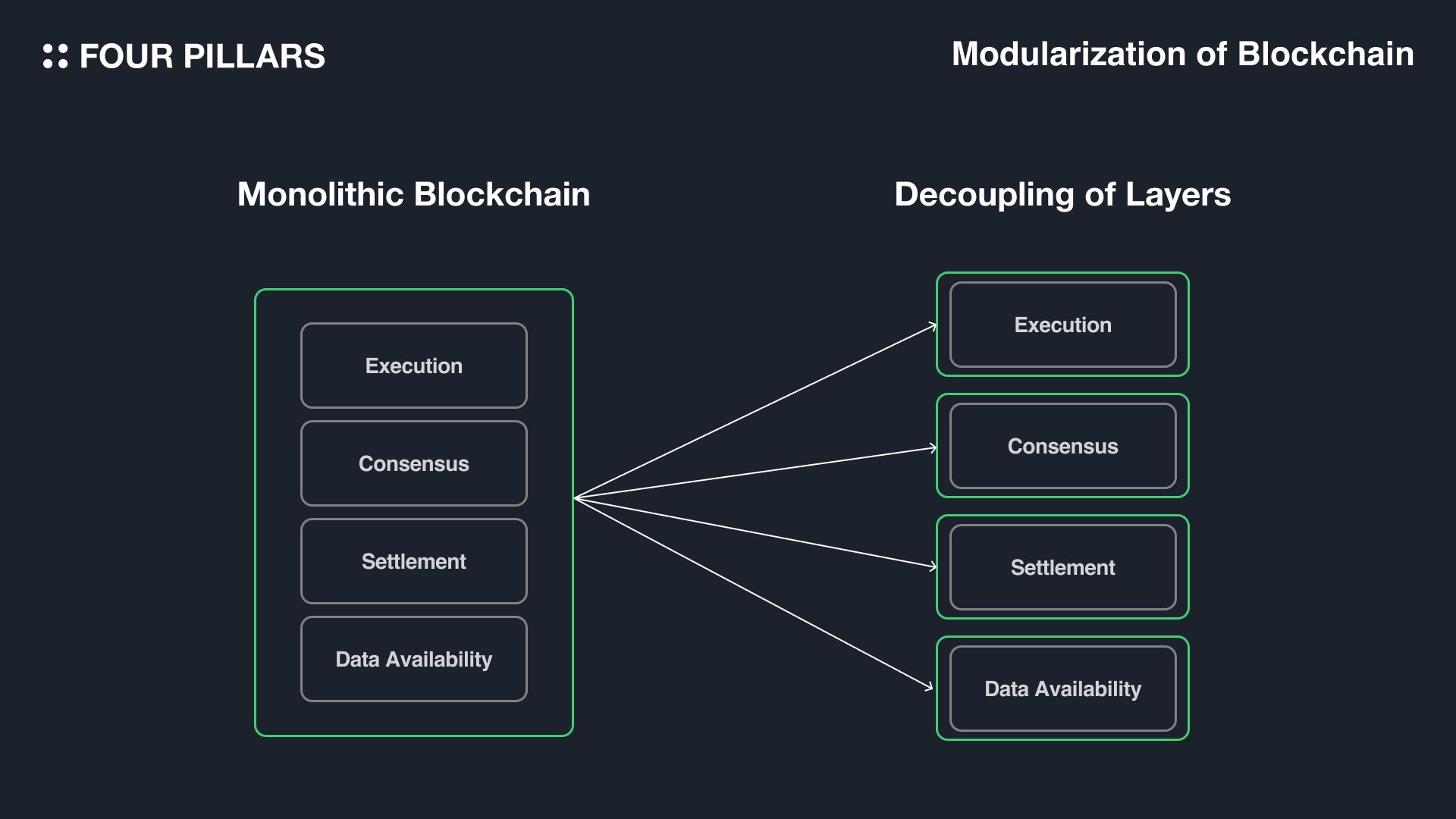
Celestia isn't just another chain; it's a dedicated DA layer in the modular blockchain stack. Execution happens on rollups, settlement on Ethereum, and data availability? Handled by Celestia. This separation boosts efficiency. Ethereum-based rollups, like those using the Quantum Gravity Bridge, tap Celestia as an external DA provider. It's a smart contract on Ethereum that verifies Celestia blocks, letting L2s post minimal commitments while offloading bulky data.
Why does this matter for secure DA for L2 scaling? Rollups need data available to reconstruct state and challenge frauds. Ethereum's on-chain DA is secure but limited by 30 million gas blocks. Celestia, with DAS, scales to 1GB and blocks, future-proofing as rollups proliferate. I've seen projects migrate, slashing costs 10x while inheriting Celestia's robust security model. And with upgrades like Matcha on the horizon, Celestia's dominance looks set to grow.
Compare that to rivals; even in the 2026 DA race against EigenDA, Celestia's first-mover lead shines. Their light client verification means anyone can run a node on a phone, democratizing validation. For developers building modular DA layers Ethereum style, this is gold.
Celestia (TIA) Price Prediction 2027-2032
Forecasts based on Data Availability market growth, Ethereum L2 rollup adoption, and modular blockchain trends (from 2026 baseline ~$1.00 avg)
| Year | Minimum Price (USD) | Average Price (USD) | Maximum Price (USD) | Est. YoY Growth % (Avg) |
|---|---|---|---|---|
| 2027 | $0.90 | $1.80 | $3.60 | +80% |
| 2028 | $1.50 | $3.20 | $6.40 | +78% |
| 2029 | $2.50 | $5.50 | $11.00 | +72% |
| 2030 | $4.00 | $9.00 | $18.00 | +64% |
| 2031 | $6.50 | $14.00 | $28.00 | +56% |
| 2032 | $10.00 | $22.00 | $44.00 | +57% |
Price Prediction Summary
Celestia (TIA) is forecasted to experience substantial growth from 2027-2032, with average prices climbing from $1.80 to $22.00 (over 12x), fueled by its 50% DA market dominance, DAS innovation for secure L2 scaling, and Matcha upgrade. Minimums reflect bearish cycles/competition; maximums capture bullish adoption surges. Projections assume crypto market recovery post-2026.
Key Factors Affecting Celestia Price
- Leadership in Data Availability Sampling (DAS) enabling efficient Ethereum L2 rollup scaling
- 50% market share in DA processing (160+ GB rollup data) and upcoming Matcha upgrade
- Rising modular blockchain adoption and rollup revolution
- Crypto market cycles with bull runs post-Bitcoin halvings
- Competition from EigenDA/Avail and regulatory developments
- Technology enhancements like Namespaced Merkle Trees (NMTs) and Quantum Gravity Bridge
- Potential market cap expansion to $20B+ with broader L2 integration
Disclaimer: Cryptocurrency price predictions are speculative and based on current market analysis. Actual prices may vary significantly due to market volatility, regulatory changes, and other factors. Always do your own research before making investment decisions.
Real-World Impact: Rollups Thriving on Celestia DA
Ethereum rollups split into two camps using Celestia: those settled on Ethereum via bridges and native Celestia-composed ones. The former keeps Ethereum's economic security, posting data roots to Celestia for cheap, verifiable storage. Take a rollup processing thousands of TPS; without DAS, light clients couldn't keep up. With it, they sample, confirm, and trustlessly interact.
In my analysis, this setup crushes monolithic chains. Rollups reduce Ethereum congestion, batching txs off-chain. Celestia ensures that data layer is scalable and censorship-resistant. Current stats? TIA at $0.3151, holding steady despite market wobbles, signaling investor faith in DA's future.
Projects like Doma and Towns are already live, posting data to Celestia and settling on Ethereum. They hit thousands of TPS at fractions of the cost, proving data availability sampling Celestia isn't theory, it's battle-tested. Light clients sample just 100 bytes per block to verify availability with 99.9999% confidence. That's the kind of precision developers dream of when scaling Celestia DAS rollups.
DAS vs. the Competition: Why Celestia Leads the Pack
Let's get real about Celestia vs EigenDA. EigenDA uses EigenLayer's restaked ETH for security, which is clever but adds restaking risks and Ethereum dependency. Celestia? Sovereign DA layer with its own token economics, TIA at $0.3151, down just -0.0352% in 24 hours (high $0.3301, low $0.3122). No middleman, pure modularity. Ethereum's native DA? Secure, sure, but caps at ~1MB blocks. DAS unlocks 1GB and without bloating the chain.
In practice, Celestia's Namespaced Merkle Trees shine here. Each rollup gets its namespace, so data doesn't mix. Challengers compute proofs against specific namespaces, slashing dispute times. EigenDA relies on operator committees; Celestia on anyone-with-a-node. I favor Celestia's permissionless vibe, it scales with adoption, not trust assumptions.
Celestia DAS vs. EigenDA vs. Ethereum DA
| DA Solution | Block Size | Cost per MB | Light Client Verify | Market Share |
|---|---|---|---|---|
| Celestia | 1GB | <$0.01 | Sampling (bytes) | 50% |
| EigenDA | 400KB | ~$0.05 | Operator proofs | Emerging |
| Ethereum | 1MB | $5 | Full download | N/A |
This table underscores Celestia's edge in modular DA layers Ethereum ecosystems. They've processed 160GB of rollup data, dwarfing rivals. For L2 builders, it's a no-brainer: plug into Celestia via SDKs, post data shares, and boom, scalable DA.
Bridging Worlds: Quantum Gravity Bridge in Detail
The Quantum Gravity Bridge is Celestia's killer app for Ethereum L2s. This Ethereum contract acts as a trust-minimized bridge, verifying Celestia DA roots on-chain. Rollups post a tiny 32-byte commitment to Ethereum, while dumping gigabytes to Celestia. Light clients on Ethereum query Celestia samples via the bridge, no full downloads needed.
Security flows from math: if data's missing, samplers detect it probabilistically. Attackers can't hide withholding without controlling 1/3 and of stake, same as full nodes. I've audited similar setups; the failure probability is astronomically low, like 1 in 10^20. For secure DA for L2 scaling, this beats posting everything to Ethereum, where gas fees spike during peaks.
Rollups like Saga and Derive are integrating, composing execution atop Celestia DA. Ethereum-settled ones keep finality via L1 while outsourcing storage. It's hybrid perfection: Ethereum's economics, Celestia's scale.
Looking Ahead: Matcha and Beyond
Celestia's Matcha upgrade looms large, promising 100x throughput jumps via optimized DAS and async consensus. Imagine 100GB blocks, rollups at millions of TPS, Ethereum humming at peak efficiency. TIA's steady $0.3151 price reflects this momentum; investors see DA as crypto's next gold rush.
For developers, integration is straightforward. Use Celestia's Blobstream for ZK proofs or the PayForBlobs API to post data. Tools like the Quantum Gravity Bridge SDK make Ethereum bridging a weekend project. Testnets show seamless fraud proofs; mainnet's ready for prime time.
From my vantage, Celestia's DAS isn't just tech, it's the unlock for Ethereum's rollup century. Monoliths crumble under load; modular stacks like this endure. As L2s multiply, Celestia positions itself as the indispensable DA spine, fueling a more open, scalable web3. Builders, take note: the future posts here.




No comments yet. Be the first to share your thoughts!