

Ethereum rollups are pushing scalability boundaries as ETH holds steady at $2,844.86, down 3.86% in the last 24 hours. With transaction costs soaring on the main chain, developers are turning to modular data availability layers like Celestia, EigenDA, and Avail to keep data cheap and verifiable off-chain. This modular shift isn't just hype; it's a practical fix for Ethereum rollups DA bottlenecks, enabling rollups to post data efficiently while light clients confirm availability without full downloads.
These DA layers decouple data posting from execution and settlement, slashing costs by up to 100x compared to Ethereum blobs alone. Celestia pioneered this with its dedicated chain for data, EigenDA leverages EigenLayer's restaked ETH for security, and Avail focuses on lightweight sampling for broad compatibility. But verification remains tricky; rollups must prove data is available and uncensored, or risks mount.
Why Celestia, EigenDA, and Avail Lead Ethereum Rollups DA
Celestia stands out for sovereignty junkies. It uses Data Availability Sampling (DAS), letting nodes sample tiny data chunks to verify entire blocks probabilistically. No need to trust a central poster; light clients slash bad actors. At current ETH prices around $2,844.86, Celestia's model shines for high-throughput rollups dodging Ethereum's blob limits.
EigenDA, built on EigenLayer, taps into Ethereum's ecosystem deeply. Live on Mainnet, it uses restaked ETH operators to secure data availability, aligning incentives with L1 security. Perfect for teams wanting Ethereum-aligned trust assumptions without rebuilding from scratch.
Avail bridges the gap with its modular design, emphasizing KZG commitments for compact proofs. It's gaining traction for its flexibility across chains, though it faces the same quantum risks as peers. Check out comparisons from Eclipse Labs highlighting how these stack up in cost and sovereignty: Celestia for pure modularity, EigenDA for ETH embedding, Avail for balanced trade-offs.
Ethereum (ETH) Price Prediction 2027-2032
Factoring in Modular Data Availability (DA) Layers Adoption Impacts for Ethereum Rollups
| Year | Minimum Price ($) | Average Price ($) | Maximum Price ($) |
|---|---|---|---|
| 2027 | $2,400 | $4,200 | $7,200 |
| 2028 | $3,500 | $6,800 | $14,000 |
| 2029 | $3,000 | $5,500 | $9,500 |
| 2030 | $4,500 | $9,200 | $17,000 |
| 2031 | $6,500 | $12,500 | $24,000 |
| 2032 | $9,000 | $16,500 | $32,000 |
Price Prediction Summary
Ethereum (ETH) is projected to experience significant growth driven by modular DA layer adoption (e.g., Celestia, EigenDA, Avail), resolving rollup verification challenges like data availability sampling, sequencer decentralization, and economic incentives. From a 2026 baseline of ~$2,845, average prices are expected to rise progressively with market cycles—peaking bullishly in 2028 and 2031-32—reaching $16,500 by 2032 (CAGR ~31%). Minima reflect bearish scenarios (regulatory risks, market corrections); maxima capture full DA integration boosting L2 scalability, TVL, and ETH demand.
Key Factors Affecting Ethereum Price
- Adoption of modular DA layers enhancing rollup scalability and reducing costs
- Resolution of verification challenges via DAS, quantum-resistant crypto, and decentralized sequencers
- Increased L2 transaction volume and ETH fee burn from higher activity
- Market cycles aligned with broader crypto bull/bear phases
- Regulatory clarity supporting DeFi and Ethereum ecosystem
- ETH's dominant L1 position amid competition from Solana, etc.
- Macro factors like institutional adoption and Bitcoin market correlations
Disclaimer: Cryptocurrency price predictions are speculative and based on current market analysis. Actual prices may vary significantly due to market volatility, regulatory changes, and other factors. Always do your own research before making investment decisions.
Verification Challenge 1: Proving Data is Actually Available
Data availability verification blockchain is the linchpin. Rollups post data to DA layers, but users must confirm it's retrievable for fraud proofs or state validation. DAS, as in Celestia and Avail, samples 1/1000th of data to detect withholding attacks with high confidence. Yet, if sampling fails or collusion happens, entire rollups grind to a halt.
EigenDA mitigates via operator committees, but relies on Ethereum finality. Ethereum's EIP-4844 blobs helped, but modular layers extend this for sustained scaling. The catch? Light clients need efficient sampling; poor implementation leads to bloated sync times.
In a world of $2,844.86 ETH, DA layers must deliver not just cheap posts, but ironclad verification to win rollup hearts.
Sequencer Centralization: The Hidden Rollup Killer
Most rollups funnel through a single sequencer for ordering, creating censorship vectors even with solid DA like EigenDA or Celestia. If the sequencer withholds data, verification crumbles despite DA proofs. Decentralized sequencers are emerging, but lag behind. Avail's lightweight design aids multi-sequencer setups, distributing load without heavy overhead.
Economic attacks loom too. Adversaries spam low-gas, high-proof transactions, stalling finality. Arxiv papers detail how mispriced fees enable DoS on modular setups. Celestia's namespace model counters by isolating rollups, but incentives must align perfectly.
Security assumptions add spice. KZG commitments power most DA proofs, but quantum threats could forge them. Celestia, EigenDA, and Avail all lean on these; migrating to post-quantum crypto is non-negotiable for longevity. As ETH trades at $2,844.86, rollups betting on these layers must prioritize verification robustness to capture the modular wave.
Quantum risks aside, economic incentive misalignments pose another headache for EigenDA solutions and peers. Rollups on Celestia or Avail can suffer if fees don't match proving costs. Attackers flood with transactions that chew bandwidth but pay peanuts, delaying proofs and finality. This DoS vector hits modular setups hard, as DA layers like Avail's KZG proofs demand heavy computation.
Challenge 4: Economic Attacks Stalling Rollups
Arxiv research nails it: mispriced gas lets bad actors grind proof generation to a halt. Celestia's blockspace namespaces help by ring-fencing rollups, but operators still need tight fee markets. EigenDA's restaked ETH ties economics to L1, reducing drift, yet Avail's broad compatibility invites more spam if not tuned right. At ETH's $2,844.86 level, these flaws could erode confidence in Avail modular DA adoption.
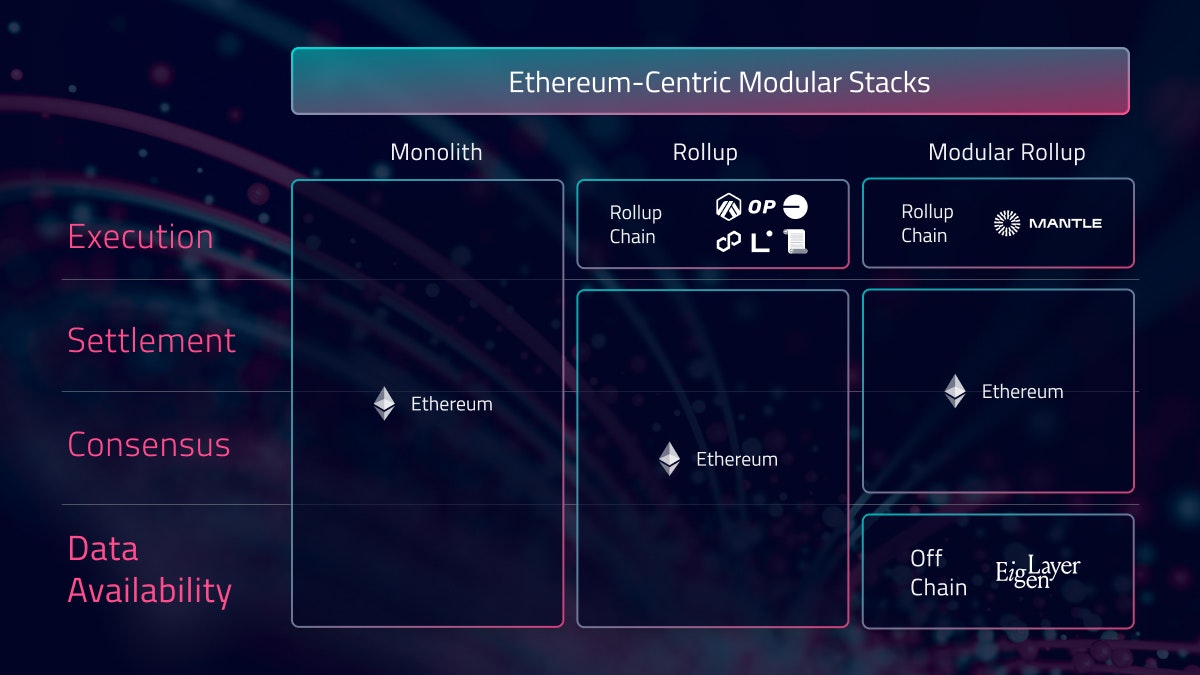
Solutions are rolling out fast. Start with beefed-up DAS across the board. Celestia doubles down on sampling efficiency, letting light clients verify Celestia DA layer blocks with minimal overhead. Avail refines its polymorphic commitments for faster checks, while EigenDA committees enforce storage proofs via EigenLayer restaking.
Patching Verification Holes: Practical Fixes
Ethereum's blobcarry from EIP-4844 sets the baseline, but modular layers push further. Decoupling data from calldata keeps costs low as volume spikes. For sequencers, decentralized designs like Espresso or Astria distribute ordering, pairing neatly with Celestia's sovereignty or EigenDA's ETH security.
Quantum-proofing demands urgency. Swap KZG for lattice-based schemes like Dilithium; all three layers eye this, with EigenDA's Ethereum roots speeding integration. Economic fixes mean dynamic fees mirroring compute load. Celestia tests surplus auctions, Avail explores priority queues, ensuring provers get paid fairly.
Comparison of Celestia, EigenDA, and Avail: DA Verification Challenges and Solutions
| Challenge Area | Celestia | EigenDA | Avail |
|---|---|---|---|
| DAS Efficiency | Highly efficient: Pioneering DAS with Reed-Solomon erasure coding and Merkle proofs; light clients sample small portions (e.g., ~100 shares for 1MB block) to verify availability without full download. | Strong: DAS via decentralized EigenLayer operator committees; scalable for Ethereum rollups with low overhead. | Robust: Advanced DAS protocols optimized for high-throughput data sampling and verification. |
| Quantum Resistance | Advantage: Avoids KZG commitments, using hash-based Merkle roots; lower quantum risk, with upgrades planned. | Challenge: Relies on KZG polynomial commitments vulnerable to quantum forgery. Solution: Transition to quantum-resistant cryptography in roadmap. | Challenge: KZG-based proofs at risk from quantum attacks. Solution: Planned migration to post-quantum schemes. |
| Sequencer Decentralization | Excellent: Enables fully sovereign rollups with decentralized sequencers; modular design eliminates central points of failure. | Good: Supports decentralization via restaked ETH operators in EigenLayer AVS; Ethereum ecosystem integration. | Strong: Permissionless network facilitates decentralized sequencer architectures and censorship resistance. |
| Economic Alignment | Solid: TIA token for fees and security; economically viable modular model with aligned incentives for DA providers. | Excellent: Leverages Ethereum's ETH restaking for shared security; prevents DoS via accurate fee mechanisms. | Effective: Native token incentives ensure fair compensation and alignment against exploitation attacks. |
Avail shines in cross-chain flexibility, letting rollups mix DA providers without lock-in. EigenDA locks in Ethereum loyalists with shared security, no new tokens needed. Celestia? Pure modular play, ideal for sovereign rollups chasing 10k and TPS. Eclipse Labs breakdowns show Celestia edging costs, EigenDA winning trust, Avail balancing both.
Decentralized sequencers top the list. Chainscore insights reveal most rollups still sequencer-centralized, but Avail's light proofs enable sharded ordering. Pair with DAS, and verification scales effortlessly. Economic models evolve too; fee burning or operator staking aligns long-term.
These fixes aren't theoretical. EigenDA's Mainnet launch proves restaking secures DA at scale. Celestia's light client network slashes sync times, Avail's testnets demo seamless Ethereum integration. As rollups mature, modular data availability layers will dictate winners in Ethereum's scaling race.
Operators get skin in the game via slashing for downtime. Light clients proliferate, probing DA continuously. With ETH at $2,844.86 amid market dips, rollups adopting these robust verifications position for rebound. Modular DA isn't flawless yet, but Celestia, EigenDA, and Avail deliver the tools to verify data cheaply and securely, fueling Ethereum's next leg up. Developers, pick your layer, implement DAS right, decentralize sequencers, and watch scalability soar.




No comments yet. Be the first to share your thoughts!