
Define your authority layers
A DA layering strategy relies on a clear hierarchy of assets. You must distinguish between primary money sites and supporting authority assets. This structure prevents algorithmic penalties by creating a natural link profile rather than an artificial one.
The primary layer consists of your main revenue-generating domains. These sites hold the core commercial intent and serve as the destination for high-value backlinks. They must be self-contained and authoritative on their own merits.
The secondary layer includes supporting domains. These assets provide contextual relevance and link equity to the primary layer without appearing spammy. They should cover niche topics or geographic variations that complement the main site.
Treat your link network like a military command structure. Just as the 2026 National Defense Strategy emphasizes clear chains of command and distinct operational roles, your SEO architecture requires defined boundaries between layers. Misidentifying your primary layer can lead to devaluation of the entire network.
Execute the linking sequence
Authority transfer isn’t a broadcast; it’s a carefully routed pipeline. To build a DA layering strategy that scales safely, you must sequence your links so that PageRank flows from high-authority seed domains through your mid-tier support pages and finally into your money sites. This workflow mirrors how the Department of the Air Force structures its data strategy: establishing a "thin, streamlined layer of enterprise technology" that makes information discoverable and sharable without creating bottlenecks. In SEO, your "discoverable" layer is the contextual bridge between your authority sources and your conversion pages.
Follow this ordered sequence to construct a natural, resilient link footprint.
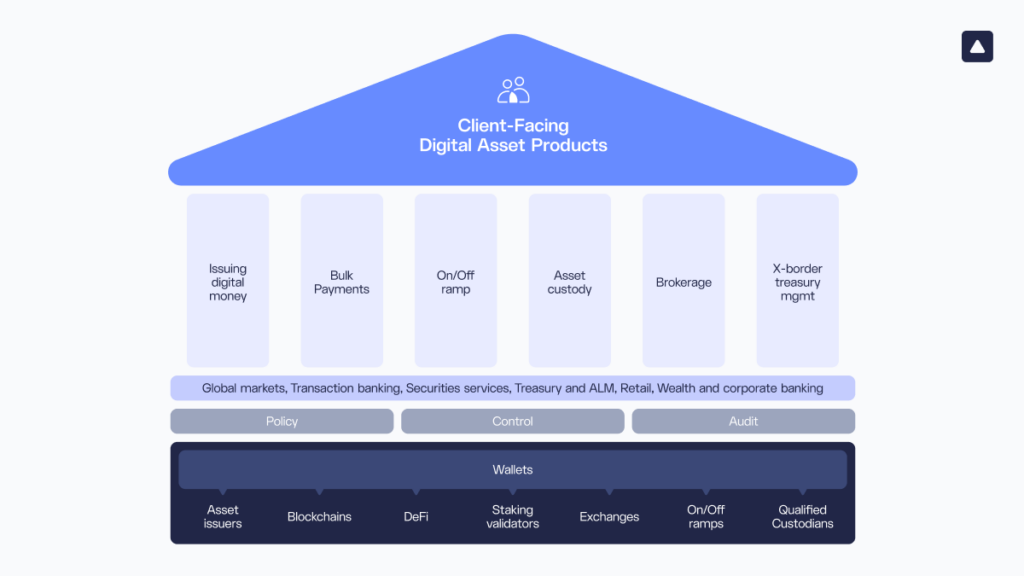
Before placing a single link, define the hierarchy. Identify which high-DA sources (Tier 1) will link to which mid-tier support pages (Tier 2), and which Tier 2 pages will link to your primary money sites (Tier 3). Use a spreadsheet to visualize this topology. Ensure every Tier 2 page has a clear topical relevance to both the Tier 1 source and the Tier 3 destination. This prevents orphaned links and ensures the authority transfer is contextually weighted by search engines.
Begin by acquiring high-authority backlinks from Tier 1 domains (DA 60+). These are your trust anchors. Focus on placements that offer contextual relevance rather than directory submissions. The goal here is not to pass maximum PageRank immediately, but to establish domain authority and trust signals. These links should point to your Tier 2 support pages, which act as the "bridge" or "buffer" zones. This separation protects your money sites from direct exposure to any potential algorithmic scrutiny while allowing them to benefit from the established trust.
Your Tier 2 pages are the engine of the layering strategy. These pages should be high-quality, content-rich assets that naturally attract links from your Tier 1 sources. Once Tier 1 links are live, ensure your Tier 2 pages contain contextual, do-follow links to your Tier 3 money sites. The anchor text here should be varied and natural, avoiding exact-match over-optimization. Think of these pages as "knowledge layers" that organize and distribute the authority received from Tier 1, much like how modern tech strategies align data management with business outcomes to ensure smooth flow.
Finally, ensure your Tier 3 money sites are receiving the authority via the Tier 2 bridge. Verify that the links from Tier 2 to Tier 3 are contextual and embedded within relevant content. At this stage, your money sites are no longer directly exposed to the risk of Tier 1 link patterns, but they are still benefiting from the cumulative authority flow. Monitor the indexing speed and ranking improvements of your Tier 3 pages. If rankings stagnate, it may indicate a need to refresh the Tier 2 content or acquire additional Tier 1 sources to keep the pipeline active.
This sequence creates a "defense in depth" for your SEO strategy. By layering the links, you dilute any single point of failure. If one Tier 1 source drops a link, the rest of the pipeline remains intact. The key is consistency: maintain the flow of authority through regular updates to your Tier 2 bridge pages and periodic acquisition of new Tier 1 sources.
Mitigate AI content penalties
To protect your DA layering strategy from algorithmic penalties, you must ensure every piece of content provides distinct value. Google’s systems are increasingly adept at identifying and demoting low-effort, AI-generated spam. The goal is not to avoid AI tools entirely, but to use them as assistants rather than primary authors. This approach aligns with modern data governance strategies that prioritize operational integrity and human oversight over raw volume.
Follow this sequence to audit and refine your content:
-
Add unique human insights. AI models generate generalized text based on existing data. Inject personal experience, original research, or specific case studies that only your brand can provide. This "human signal" is the most effective way to differentiate your content from the sea of generic AI output.
-
Verify factual accuracy. AI hallucinations can damage your site’s credibility and trigger manual penalties. Cross-check every statistic, date, and claim against official primary sources. If you cannot verify a fact, remove it.
-
Maintain structural consistency. Ensure your content follows a logical flow that matches user intent. Avoid the repetitive sentence structures common in AI writing. Vary paragraph length and use active voice to keep the reader engaged.
-
Use official sources for claims. When making bold statements, link to authoritative domains such as government publications, academic journals, or industry-leading reports. This builds topical authority and signals to search engines that your content is well-researched.
Comparison of Content Practices
| Practice | Safe (Human-Verified) | Risky (AI-Generated Only) |
|---|---|---|
| Originality | Contains unique data, personal anecdotes, or proprietary insights. | Paraphrases existing web content with minor synonym swaps. |
| Fact-Checking | Every claim is verified against primary sources. | Relies on probable but unverified information. |
| Structure | Tailored to specific user intent and query context. | Generic, one-size-fits-all templates. |
| Voice | Distinct brand voice with varied sentence structures. | Monotonous, repetitive, and overly formal. |
By treating AI as a drafting tool rather than a replacement for editorial judgment, you can scale your content production without sacrificing the quality that search engines reward. Focus on depth, accuracy, and unique perspective to build lasting authority.
Verify authority transfer
Before rolling out the DA layering strategy 2026 at scale, you must confirm that authority is passing cleanly to the target domains without triggering algorithmic alerts. This verification phase is the difference between a sustainable authority build and a penalized site. You are looking for specific signals that indicate Google recognizes the new domain as a legitimate, authoritative entity rather than a manipulative link farm.
Start by monitoring the DA layering strategy 2026 indexation status. Use Google Search Console to ensure the target domain’s key landing pages are indexed and appearing in search results for their primary keywords. If pages are not indexing, no amount of authority transfer will help. Check the "Page Indexing" report for any errors or warnings that might suggest the site is being treated as low-quality or thin content.
Next, track the movement of link equity. While Domain Authority (DA) is a third-party metric (typically from Moz or Ahrefs), you can observe its indirect effects through organic traffic growth and keyword ranking improvements for the target site. Use Ahrefs or Semrush to monitor the target domain’s backlink profile and organic keyword rankings. Look for a steady, natural increase in referring domains and a rise in rankings for competitive terms. Sudden spikes may trigger scrutiny, so aim for gradual, consistent growth.
Finally, audit for negative SEO signals. Ensure there are no unnatural patterns in the backlink profile, such as a high ratio of exact-match anchor text or links from low-quality, unrelated sites. Google’s spam algorithms are sophisticated; a clean, diverse backlink profile is essential. If you see any red flags, pause the strategy and disavow toxic links before proceeding. This verification step ensures that the authority transfer is sustainable and safe for long-term growth.
Common da layering: what to check next
Layering data authority requires balancing speed with compliance. The 2026 National Defense Strategy emphasizes eliminating legacy barriers to integrate systems rapidly, a principle that applies directly to enterprise data architecture [src-serp-1]. Leaders must standardize definitions and operationalize governance to ensure safety without slowing deployment [src-serp-4].
No comments yet. Be the first to share your thoughts!