

Blockchain technology has made massive strides, but one nagging challenge persists: scalability. As more users and applications pile into networks like Ethereum, the pressure on each node to process, store, and verify every transaction grows. This is where data availability layers (DA layers) come in, offering a fresh modular approach to break through these bottlenecks and unlock the next era of blockchain growth.
Why Data Availability Matters for Blockchain Scaling
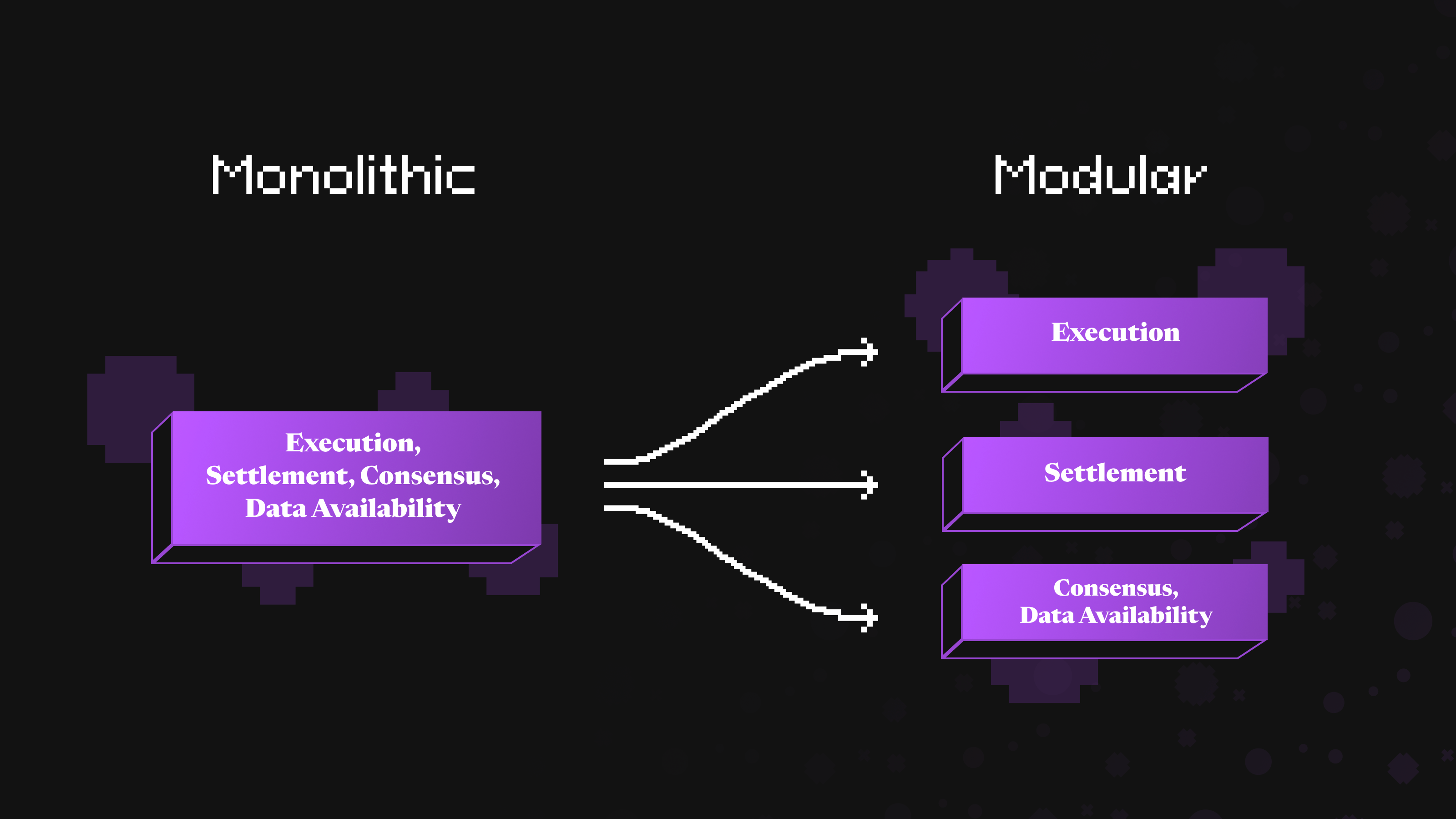
The core promise of blockchains is decentralization - anyone can participate as a node. But as transaction volumes surge, traditional monolithic blockchains force every participant to handle the entire workload: executing transactions, reaching consensus, and storing all data. This design leads to:
- Storage bloat: Every node must maintain a full copy of the blockchain's growing history.
- Verification overload: Nodes are responsible for validating every single transaction.
- Bottlenecks in throughput: The network slows down as it tries to keep up with demand.
This setup makes it tough for blockchains to scale without sacrificing decentralization or security. As Volt Capital’s deep dive points out, the data availability layer is often the main bottleneck in the so-called scalability trilemma.
The Modular Blockchain Revolution: Breaking Down the Stack
Rather than forcing every node to do everything, modular blockchain architectures split responsibilities into specialized layers:
- Execution Layer: Handles computation and state updates (think smart contracts).
- Consensus Layer: Ensures everyone agrees on what happened.
- Data Availability Layer: Guarantees that raw transaction data is published and accessible so anyone can verify it independently.
This separation allows each layer to optimize for its own function. DA layers are purpose-built to make sure all necessary transaction data is reliably available - no more forcing every node to store everything forever. The result? Lower hardware requirements for validators and nodes, greater throughput, and broader participation across devices with limited resources.
The Role of DA Layers in Layer 2 Rollups
A huge leap in scalability comes from Layer 2 solutions like optimistic or zk-rollups. These systems process transactions off-chain and periodically submit proofs or summaries back to the main chain. But here’s the catch: if users can’t access all underlying transaction data (for example if a sequencer withholds it), they can’t verify correctness or exit safely from rollups.
This is where DA layers shine. By providing an open ledger where rollup transaction data is posted and sampled by anyone, DA solutions ensure that even as execution moves off-chain, security stays intact. Projects like Celestia and Polygon Avail illustrate how dedicated DA networks are emerging as critical infrastructure for scalable decentralized applications.
If you want a deeper dive into why data availability matters not just for speed but also for decentralization and security, check out our guide at Beyond Speed: Why Data Availability Layers Are Key To Decentralization And Security.
Pioneering Implementations: Celestia and Polygon Avail Lead the Way
The industry isn’t standing still - several real-world projects now offer robust DA solutions tailored for modular blockchains:
- Celestia: Uses data availability sampling so light clients can efficiently verify that all necessary data has been published without downloading everything themselves.
- Polygon Avail: Serves both standalone chains and rollup ecosystems by offering flexible off-chain storage while guaranteeing accessibility when needed.
This new breed of infrastructure means developers can build scalable dApps without worrying about validator overload or sequencer bottlenecks - all while preserving trustlessness and transparency across networks.
As these modular data availability layers mature, they’re fundamentally changing what’s possible for blockchain networks. By decoupling data storage from execution and consensus, DA layers allow each component of the stack to scale independently. This modularity doesn’t just solve today’s bottlenecks, it prepares blockchains for tomorrow’s explosive growth in users, assets, and use cases.
Beyond Bottlenecks: New Possibilities Unlocked by DA Layers
With dedicated DA layers in place, several exciting innovations are now within reach:
- Interchain communication: Modular chains can share data more efficiently, enabling seamless cross-chain dApps and liquidity flows.
- Validator specialization: Validators can focus on their strengths, some secure consensus, others ensure data availability, making the network both more robust and more accessible.
- Permissionless participation: Lower hardware requirements mean anyone with a basic device can join as a light client or validator, boosting decentralization.
This progress isn’t just theoretical. We’re already seeing DA-powered rollups with dramatically higher throughput than mainnet Ethereum, and new frameworks that let developers spin up custom execution environments without being held back by legacy bottlenecks.
Celestia vs Polygon Avail: Data Availability Layer Feature Comparison
| Feature | Celestia | Polygon Avail |
|---|---|---|
| Type | Modular Blockchain Network | Data Availability Solution |
| Primary Focus | Scalable data availability via modularity | Efficient, reliable off-chain data availability for multiple use cases |
| Data Availability Technique | Data Availability Sampling | Optimized for rollups and standalone chains |
| Supported Use Cases | Layer 2 rollups, modular chains | Layer 2 rollups, standalone chains, sidechains |
| Consensus Mechanism | Tendermint-based (Proof-of-Stake) | Custom consensus for DA layer |
| Interoperability | Designed for modular blockchain ecosystems | Supports multiple chains and rollups |
| Security Model | Decentralized, sampling-based verification | Decentralized, optimized for data accessibility |
| Developer Ecosystem | Growing, with modular SDKs and tooling | Integrated with Polygon ecosystem and developer tools |
| Launch Status | Live mainnet | Live mainnet |
| Notable Strength | Pioneered modular DA with sampling | Flexible integration for diverse blockchain architectures |
Key Challenges and Trade-Offs
No technology is perfect out of the gate. Modular DA layers introduce their own design considerations. For example:
- Data withholding attacks: If a malicious actor tries to hide transaction data, robust sampling mechanisms are needed for detection.
- Economic incentives: Networks must align rewards so validators are motivated to store and serve data reliably.
- User experience: As modular stacks become more complex, UX design must keep onboarding simple for both developers and end-users.
The good news is that open research and real-world testing are rapidly advancing solutions to these challenges. As adoption grows, expect ongoing upgrades to both protocols and tooling across the DA ecosystem.
The best part? You don’t have to be a protocol engineer to benefit from these advances. As more user-friendly tools emerge atop modular stacks like Celestia and Polygon Avail, developers will find it easier than ever to launch scalable dApps while users enjoy faster transactions at lower costs, all without sacrificing security or transparency.




No comments yet. Be the first to share your thoughts!