
Define your data throughput needs
Before selecting a DA layer, you must quantify the specific volume of data your L2 project will generate. A DA layer acts as the public record where rollups publish transaction data, allowing light nodes to verify block validity without storing the entire chain. If your throughput estimates are inaccurate, you risk either overpaying for unused capacity or facing network congestion when demand spikes.
Start by modeling your expected transaction count. Multiply the projected daily active users by the average number of transactions per user. Then, apply the average data footprint per transaction, which varies significantly between simple transfers and complex state updates. This calculation gives you a baseline for daily data throughput, measured in megabytes or gigabytes.
Next, compare your baseline against the maximum capacity of potential DA layers. Official audits from L2Beat provide current data capacity metrics for major DA solutions. Ensure your peak load, typically 3-5 times your average, falls within the layer’s sustainable limit. This margin prevents bottlenecks during high-traffic events, such as token launches or market volatility.
Finally, account for data retention requirements. Some DA layers charge based on data age or storage duration. If your project requires long-term historical data accessibility for compliance or auditing, factor these storage costs into your throughput model. A layer that offers cheap short-term storage but expensive archival access may become prohibitively expensive as your project matures.
Compare modular DA solutions
Choosing a DA layer requires weighing cost, security assumptions, and throughput against your L2’s specific workload. The following comparison contrasts the three primary modular options—Celestia, EigenDA, and Avail—against Ethereum’s native EIP-4844 solution.
Each DA layer uses a different mechanism to ensure data is available and verifiable. Celestia uses erasure coding to spread data across a decentralized network, while EigenDA leverages Ethereum’s existing validator set for security. Avail uses a light client model to verify data availability, and EIP-4844 (proto-danksharding) offers a native, though more expensive, alternative for Ethereum L2s.
The table below breaks down the key technical differences. Use this to identify which DA layer aligns with your project’s budget and security requirements.
| Feature | Celestia | EigenDA | Avail | Ethereum EIP-4844 |
|---|---|---|---|---|
| Security Model | Decentralized blob space | Ethereum validators | Light client verification | Ethereum consensus |
| Cost per MB | Low | Low | Low | Higher |
| Throughput | High | High | High | Moderate |
| Data Verification | Light clients | Ethereum nodes | Light clients | Ethereum nodes |
| Integration Complexity | Medium | High | Medium | Low |
Celestia is often the default choice for new modular chains due to its simplicity and low cost. However, it introduces a new trust assumption: the security of the DA layer itself. EigenDA offers a compelling alternative by reusing Ethereum’s security, which reduces the need for a separate DA validator set. Avail provides a middle ground with its light client model, allowing for efficient verification without the full overhead of Ethereum nodes.
EIP-4844 remains the most integrated option for Ethereum-native L2s, but it is not a true DA layer. It is a data blob space that is still subject to Ethereum’s congestion and pricing dynamics. For L2s seeking true modularity and lower costs, a dedicated DA layer like Celestia, EigenDA, or Avail is usually the better path.
Integrate the DA layer into your stack
Choose a DA Layer for Your L2 Project works best as a clear sequence: define the constraint, compare the realistic options, test the tradeoff, and choose the path with the fewest hidden costs. That order keeps the advice usable instead of decorative. After each step, pause long enough to check whether the recommendation still fits the reader's actual situation. If it depends on perfect timing, unusual access, or a best-case budget, include a simpler fallback.
Verify data availability guarantees
When choosing a DA layer for your L2 project, the goal is ensuring that transaction data remains accessible and verifiable. If data disappears, the L2 cannot prove its state, leading to potential fund loss or chain halts. You must verify that the DA layer’s architecture supports light node verification without requiring full data downloads.
Check blob inclusion proofs
Confirm that the DA layer uses verifiable data availability sampling (DAS) or similar cryptographic proofs. These mechanisms allow light nodes to sample small subsets of data and mathematically confirm that the full dataset is available. Without these proofs, you are relying on trust rather than cryptographic guarantees.
Verify light node sync
Test whether light nodes can sync with the DA layer efficiently. A robust DA layer should allow nodes to download only the headers and sampled data chunks, not the entire blob. If syncing requires downloading terabytes of data, the layer is not optimized for light clients, increasing centralization risks.
Monitor availability dashboards
Review real-time metrics from sources like L2Beat. Look for consistent data submission rates and historical uptime. A DA layer that frequently misses submission windows or experiences prolonged outages poses a significant risk to your L2’s continuity.
Common DA integration mistakes
The easiest mistake with Choose a DA Layer for Your L2 Project is comparing options on the most visible detail while ignoring the day-to-day constraint. A choice can look strong on paper and still fail because it is too hard to maintain, too expensive to repeat, or awkward in the actual setting. Use the same checklist for every option: fit, cost, durability, timing, upkeep, and fallback plan. That keeps the comparison practical instead of drifting into preference alone.
The simplest way to use this section is to write down the real constraint first, compare each option against it, and choose the path that still works outside ideal conditions.
Frequently asked questions about DA layers
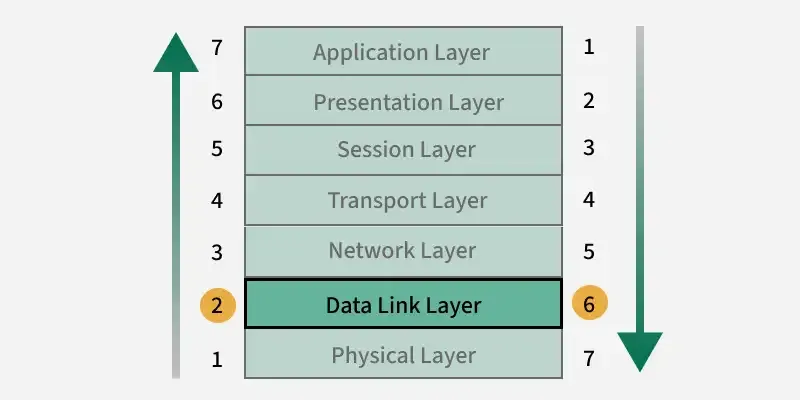
This section addresses common questions about data availability (DA) layers, clarifying misconceptions about OSI models and L1/L2 distinctions.
[1] Chainlink, "Data Availability Layers"
[2] Coinbase Learn, "What are Layer 3 Blockchains?"
[3] Wikipedia, "OSI model"
No comments yet. Be the first to share your thoughts!